
Teams | Collaboration | Customer Service | Project Management

What is ChatGPT? An Introduction to OpenAI's Conversational AI Model

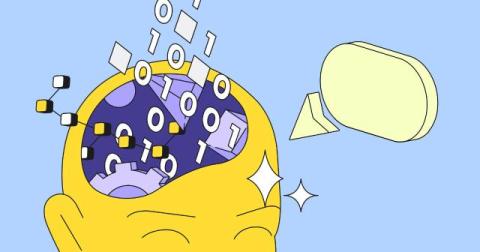
ChatGPT took the world by storm at the end of January and revolutionized the use of Artificial Intelligence (AI) for creating content. But what is ChatGPT exactly? In a nutshell, it’s a conversational AI model developed by OpenAI, an AI research lab based on natural language processing (NLP) and deep learning. It is designed to provide users with an easy and intuitive way to interact with an AI system in natural language. Keep reading to discover what it can do, how it works, and how to use it.

How the C-suite can navigate the intersection of AI, crypto, cloud and more

If the recent hype around ChatGPT is anything to go by, the world seems to be reaching an inflection point in artificial intelligence (AI) and associated tools. (GPT stands for Generative Pre-trained Transformer, a large language model for generating text using deep learning.)

9 Ideas to Use ChatGPT for IT Support

ChatGPT is the newest social media sensation. According to Open AI’s President Greg Brockman, more than a million people signed up to try the chatbot in just five days of its launch. From writing codes and college essays to explaining scientific concepts, people seem to be putting it to the test – and we aren’t the exception. Designed to assist customer support teams, the chatbot has the potential to be a valuable tool for help desk agents.

How to scale a multilingual support team with AI

Multilingual support is a must when serving an international customer base: 75 percent of consumers from 29 countries say they’re more likely to purchase from the same brand again if customer care is in their language. That’s not only important for CX in general, but especially so in times when companies are tightening their belts and focusing on customer retention over acquisition: After all, wowing your existing customer base is 5x cheaper than acquiring new customers.

The Fourth Industrial Revolution: How automation and AI will impact manufacturing

Workers on production lines, assembling industrial goods with wrenches is one image that usually comes to mind when people think of the manufacturing industry. But now that we’re in what’s being described as the Fourth Industrial Revolution, that visual is as outdated as the steam engine. According to the World Economic Forum, “the First Industrial Revolution used water and steam power to mechanise production. The second used electric power to create mass production.

How e-commerce brands use conversational AI to reduce customer effort

The e-commerce market has exploded over the past few years and is continuing to grow at an accelerated rate. By 2023, online retail sales are anticipated to reach.17 trillion. With more people doing their shopping online than ever before, e-commerce CX has become a priority for many businesses. With a highly competitive landscape of as many as 12 million e-commerce companies, delivering easy and convenient customer experiences is more than a differentiator—it is a necessity for brand success.

Ai-Powered Time Tracking Solution For Manufacturing Workforce | Workstatus

When running an organization that relies on dozens of human workers, it can be hard to ensure your team members are doing the job with complete efficiency. While it seems easy to manage huge workers but it is much harder. Industries like manufacturing have their own set of challenges when it comes to ensuring their manufacturer are working at maximum productivity. For such challenges, a great solution is Hubstaff, one of the best workforce management software for manufacturing firms.