
Teams | Collaboration | Customer Service | Project Management

Enterprise Messaging Platform: The Buyer's Guide for Security-First Organizations

In many enterprises, communication is fragmented across multiple tools. Employees move between email, Microsoft Teams or Slack, WhatsApp groups, video conferencing platforms, file-sharing applications, and in some cases even legacy phone systems just to complete everyday work. Usually, because no single tool provides secure communication across multiple formats. Are you evaluating enterprise messaging platforms for your organization?

Enterprise Communication Solutions: What Security-First Organizations Actually Need

In many enterprises, communication is fragmented across multiple tools. Employees move between email, Microsoft Teams or Slack, WhatsApp groups, video conferencing platforms, file-sharing applications, and in some cases even legacy phone systems just to complete everyday work. Usually, because no single tool provides secure communication across multiple formats. For security and compliance teams, this creates a difficult challenge.

5 Best Employee Monitoring Software Solutions for Growing Enterprises in 2026

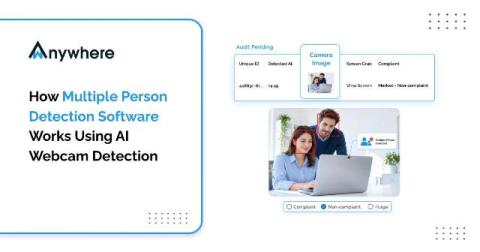
Managing a large distributed team is genuinely difficult. You need to know who is working, what they are working on, and whether your billable hours are adding up correctly. The right employee monitoring software gives you that visibility without turning your workplace into something no one wants to show up to.

Communication Styles - A Complete Guide to Types, Examples, and Workplace Success

Communication styles are the consistent patterns and approaches people use to share information, express ideas, and respond to others — in the workplace, in relationships, and in everyday interactions. Most people default to one dominant style, shaped by personality, upbringing, and experience, but the most effective communicators learn to identify their own style and adapt it depending on the situation and the person they are talking to.

Remote Work: What It Means and How It Works

Remote work is a work model where employees perform their job duties outside a traditional office using digital tools, internet connectivity, and cloud-based systems. It allows professionals to collaborate, communicate, and complete tasks from home, co-working spaces, or any location without needing physical presence in an office.

AI at scale: powering the digital workplace (summit recap)

Most enterprise AI programs don’t fail at the model level. They fail at the foundation — the data strategy, governance model, access controls, and measurement discipline that determine whether a pilot ever becomes a production system. The organizations scaling AI well did the unglamorous work first.

Employee Attendance Rate Formula: Calculation & Benchmarks

Employee attendance rate = (Total Days Present ÷ Total Working Days) × 100. It measures the percentage of scheduled workdays an employee or team actually shows up for, excluding approved leave in most calculation methods. A healthy attendance rate for most organizations falls between 95% and 98%.

How to Give Clients Project Visibility without Giving Them Full Access

For agencies, giving clients project visibility often comes down to two imperfect options: manual reports that take time to prepare or broad access to a tool that can expose internal information. This guide shows how to create a controlled project visibility model that gives clients the right information at the right level of detail without handing over the keys.

How to Build Custom Software for Team Collaboration: A Detailed Guide

As a company grows, off-the-shelf collaboration instruments often turn into a bottleneck. Employees need to juggle dozens of apps with limited integrations and high subscription budgets. Custom software for team collaboration helps you address both process and cost efficiency concerns. Below, we discuss the key aspects of building a custom collaboration platform: steps, technology selection, cost estimates, and a list of top development service providers.

Group Communication - Types, Examples, Apps, and Best Practices

Group communication is the process of exchanging information, ideas, and feedback among three or more people working toward a shared goal. It enables teams to collaborate, solve problems, make decisions, and stay aligned in workplaces, educational institutions, and remote environments. Whether communication happens through meetings, messaging apps, video calls, or face-to-face discussions, effective group communication improves teamwork, reduces misunderstandings, and increases productivity.