
Teams | Collaboration | Customer Service | Project Management

Cybersecurity Risk in Digital Collaboration: What It Is and How to Manage It

Cybersecurity risk in digital collaboration is the exposure to harm or the potential loss that comes from using messaging, calling, conferencing, and file-sharing tools to run day-to-day work. It covers the potential for data theft, unauthorized access, service disruption, and compliance exposure tied to a compromised, misconfigured, or ungoverned collaboration tool.

Critical National Infrastructure: Security, Threats & Protection

Critical national infrastructure covers power grids, water systems, healthcare, financial networks, communications, transport, and other infrastructure where disruption can have serious consequences for the nation. Protecting these systems means knowing what infrastructure is critical, how different sectors depend on each other, and which threats could interrupt essential services.

HIPAA-Compliant Texting: Rules, Risks & Best Practices

Text messaging has become one of the fastest and most convenient ways for healthcare professionals to communicate, and that speed is exactly why it creates compliance risk. Most consumer apps are not HIPAA-compliant, and texting through those apps creates risks for your organization. But that doesn’t mean you have to skip texting entirely.

Understanding the Privacy and Security Implications of OpenAI's Apple Messages Plugin

OpenAI's new Apple Messages plugin gives ChatGPT access to the Messages application on a Mac. Once enabled, users can ask ChatGPT to find conversations, summarize them, draft replies, and send messages. That has understandably raised questions about what it means for iMessage privacy. The starting point is understanding what the plugin does and, just as importantly, what it doesn't do.

Enterprise Cyber Security Solutions for Security Leaders

Enterprise security is becoming more complex because companies have more users, devices, cloud services, and third-party applications to protect than ever before. Many successful attacks still exploit basic security gaps across these environments rather than sophisticated vulnerabilities. Enterprise cyber security solutions help organizations protect every layer of the business, from networks and endpoints to identities, data, and communication. In this guide, you'll learn.

AT&T and Verizon China Hack: End-to-End Encryption is Critical But Not Enough

The recent revelations of China’s hack of western telecommunications providers across multiple countries are a red flag for corporate and government leaders who care about their sensitive data. The exfiltration of massive amounts of Internet data from western mobile and fixed line networks tells us that end-to-end encryption of internal data is table stakes, and that data protection requires a zero-trust, zero-knowledge, and post-quantum-friendly approach.

The Four Risks That Enterprises Must Consider in Digital Collaboration

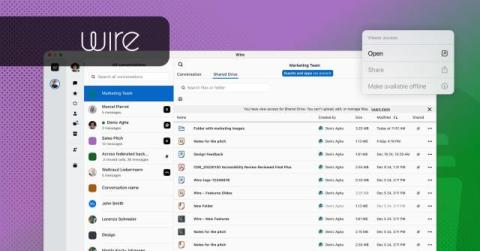
Digital collaboration, including messaging, conferencing, and content collaboration, has become the connective tissue of modern organizations. But for IT, cybersecurity, and compliance leaders, that connective tissue has also become a growing liability because of a gap between their perceptions and the reality of risk.

Cyber Resilience: Strategy, Frameworks & Compliance [2026]

Every organization will experience cyber disruptions at some point. The difference between companies that recover quickly from cyber attacks and those that face prolonged downtime often comes down to their cyber resilience. In this guide, you'll learn what cyber resilience is, how it differs from cybersecurity, the frameworks and regulations that shape resilience programs, and the practical steps to building a cyber resilience strategy.

What Our Report Says on NIS2 Readiness

NIS2 has moved from a directive text to a daily operational reality for thousands of organizations across the EU, and Wire's new State of Secure Collaboration 2026 report shows how far everyday collaboration habits have to travel to catch up with that reality. We surveyed 208 IT, security, and compliance leaders across France, Germany, and the UK about how they collaborate, what they consider sensitive, and how prepared they feel for the regulation.

Why automated breach response matters for remote and hybrid teams

When a breach happens, the real damage rarely starts at the moment of intrusion. It starts in the gap between when a breach is detected and when someone actually acts on it. For a security team watching dashboards during business hours, that gap might be minutes. For a remote employee working late on an unattended laptop, or a hybrid worker switching between a home network and a coffee shop hotspot, that gap can stretch into hours or days.