
Teams | Collaboration | Customer Service | Project Management

The latest News and Information on Collaboration, tools and related technologies.

From plan to presentation in minutes: How Gamma brings your Atlassian work to life

Atlassian and Gamma are now deeply connected, so your work, and the context behind it, moves with you from plan to presentation. AI is supposed to understand your work. But it can only see what it can reach, and right now, your work is scattered. Updates live in slide decks, details hide in Jira tickets, decisions are buried in Confluence. We expect AI to “just know” how it all connects, then wonder why the output feels generic.
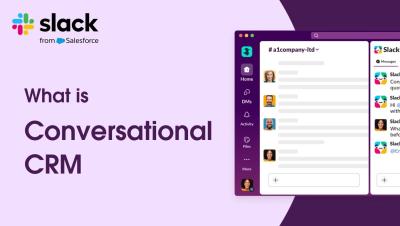

What is Conversational CRM (Explained in 60 Seconds) | Slack

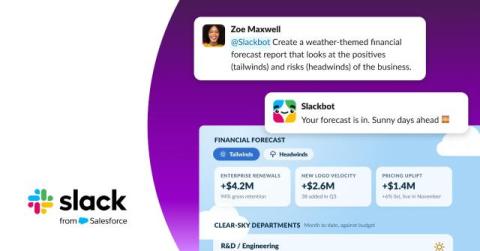
A conversational CRM connects your customer data, conversations, and AI so teams can manage relationships right where work already happens. The Problem: Scattered Customer Data Most teams don't work inside a traditional CRM—they're talking in chats, emails, and meetings instead. Customer information ends up scattered everywhere, making it harder to see the full picture.

Slackforce is here. Introducing Surfaces: live interfaces that anyone can build and that everyone can act on

Advanced users see the best outcomes from AI, because they know how to prompt, iterate and stitch results together. Everyone else opens the tool and gets something mediocre, then moves on. The tools simply weren’t built with everyone in mind. That’s the challenge Slackforce helps solve: Slack and Salesforce working as one, so you don’t need to be a computer expert to get a real result. Slackforce Surfaces makes it easy for anyone to build.

The leadership advantage AI can't automate: Attention

As AI accelerates work, leaders need to be more deliberate about what technology takes off people’s minds and where human attention can create the most value. AI promises to help organisations move faster. But at two Asana executive dinners held in Sydney and Melbourne in August, a different leadership question emerged: what should we choose not to accelerate? The challenge is not finding more hours in the day, but creating better conditions for the hours people already spend.

Unified Collaboration Platforms: 5 Tools That Bring Work Together

Think about everything a smartphone quietly replaced. The camera you used to pack for trips. The alarm clock on your bedside table. The paper map folded somewhere in the car. A music player, a calculator, a GPS unit, and a drawer full of chargers with no obvious owner. None of those things became useless. We just stopped needing each one separately when one device could handle most of the same jobs.

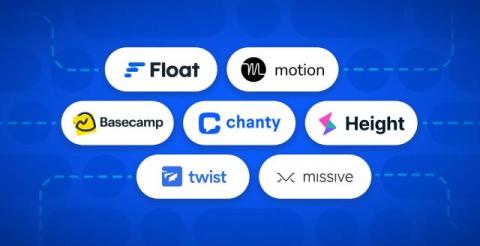
7 Effective Tools for Better Work Coordination in 2026

Nobody puts “coordination” on a job title, and yet almost everyone ends up doing it. Work coordination is the virtuous orchestration of internal and external processes – the constant, low-level hum of making sure the right task reaches the right person at the right time, that a decision made in one channel doesn’t get lost before it reaches the people who need to act on it, that a client-facing deadline and an internal review cycle actually meet in the middle instead of colliding.

6 Best Remote Monitoring Tools with Productivity Scoring in 2026

Managing a remote team is easy when everyone is sitting in the same office. You can walk around, check in with people, and get a general sense of how work is moving. But remote work is different. Someone can be online all day without getting much meaningful work done. At the same time, someone else might spend hours in meetings, research, design software, or other work that doesn't necessarily produce a lot of keyboard or mouse activity.

Cyber Resilience Act: What changes this week and how Element is preparing

On 11 September 2026, the first substantive deadline under the Cyber Resilience Act (Regulation (EU) 2024/2847, "the CRA") will come into effect. This Regulation entered into force on 10 December 2024, but it applies in stages, and this week’s date is the second of three stages. As from 11 September, manufacturers of products with digital elements placed on the EU market become subject to the reporting obligations set out in Article 14.

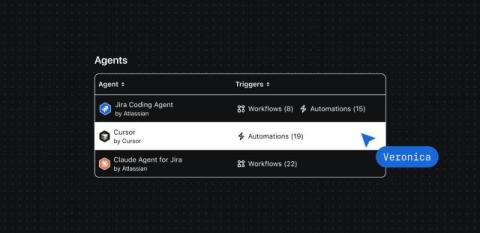
We're bringing governed agent loops to the AI-Native SDLC

Here’s a stat that’s been rattling around in my head. In our 2026 AI SDLC study, 94% of engineering leaders told us they’re using AI, but only 6% have the systems to actually scale it across their whole software lifecycle. Almost everyone is playing with agents, yet almost no one can let agents run at scale without things breaking.