
Teams | Collaboration | Customer Service | Project Management

Application Blocking for Employees: Use Cases, Benefits, and Best Practices

What if the greatest security threat is not a virus, but an application an employee has been given permission to install without the IT team’s knowledge? From AI assistants and cloud storage to instant messaging, project management, and browser plug-ins, employees use and navigate across a dozen different applications each workday, from instantaneous communication and collaboration to preparing documents, completing projects, accessing business systems, and interacting with their data.

Best AI Agents for HR in 2026: Ranked and Compared

HR teams have no shortage of AI tools in 2026. The harder question is which ones can actually help employees get HR work done. Many platforms can summarize a policy, answer a benefits question, or generate an HR response. Fewer can understand an employee's request, retrieve the right information, connect to live HR systems, take an approved action, route an approval, and involve HR when human judgment is required. That distinction matters when evaluating the best AI agents for HR.

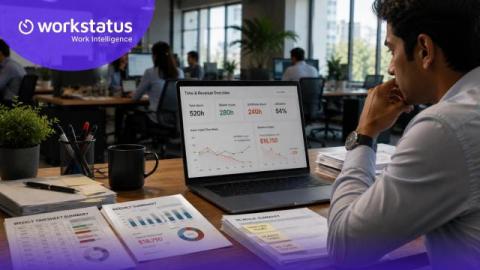
Time Leakage: Why Your Business Is Losing Revenue Every Week

Your delivery team is executing projects on time. Utilization looks strong across the board. Your team worked the hours and billed the clients. But when you close the month and reconcile billing against time records, something doesn’t add up. The hours your team worked don’t match what you charged. The projects that look profitable on paper aren’t. And the margin you expected has quietly disappeared.

Building a Conversion-Focused Marketing Funnel in Miro

A marketing funnel is only useful when your whole team can see it, contribute to it, and execute from it. In this video, we walk through how to build a complete marketing funnel in Miro using templates, covering all five stages from Awareness to Loyalty, adding tactics, assigning ownership, and using Miro AI to generate supporting documents and roadmaps directly from your funnel. One canvas. Full funnel visibility. Zero misalignment.

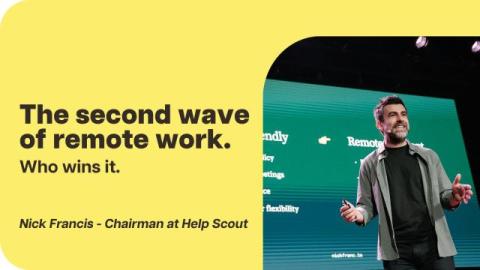
Remote-friendly is not enough anymore. Here's what remote-excellent looks like

The first wave of remote work had a low bar. Companies went remote because a pandemic gave them no choice. Being remote at all was the differentiator. The second wave is different. It is voluntary, which means it is competitive. Companies now choose whether to offer remote flexibility. Which means the employees choosing to work for them have genuine alternatives. According to Buffer, 98% of workers want remote work at least some of the time. 46% would consider leaving if forced back to office full-time.

WhatsApp in Social Care: The Compliance Risk and What Replaces It

It's a familiar story. A social worker gets a message from a client on a Saturday. A family needs to move a home visit. A colleague forwards a photo of a document that has to be dealt with before Monday. None of it goes through an official system. All of it goes through WhatsApp, because that is where the client already is, and because it works.

A Device Provisioning Checklist for Remote Teams'

Most organisations can describe their hiring process in detail and their device process not at all. The laptop is ordered, it arrives at an address nobody has visited, and somewhere between the courier and the first standup a set of decisions gets made by whoever happens to be available. That is how a distributed team ends up with eleven slightly different machines.