

Teams | Collaboration | Customer Service | Project Management

How to price professional services projects: the four-gate method

I have spent enough time in agencies to know how to price professional services projects badly. The reason most projects lose money has little to do with the pricing model on the proposal. It comes down to two things nobody systematises: what the work truly costs to deliver, and what happens to that cost after the client signs. This guide fixes both with a repeatable four-gate method.

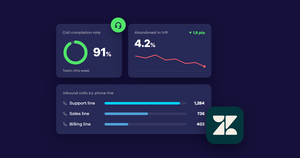
Zendesk Analytics: Five Custom Talk Metrics That Give You the Numbers You Really Need

Go beyond Zendesk Talk’s default reporting with five custom metrics (and one essential attribute) that reveal what’s really happening on your voice channel. Zendesk Voice (previously Talk) comes with a range of built-in reports, but most teams quickly find they need more flexibility as they try to drill into what’s really going on. The default metrics are often too broad to give real insight into what is happening in any meaningful way that can be actioned.

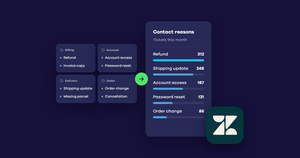
Zendesk Analytics: How to Combine Multiple Attributes into a Single Reporting Field

Learn how to merge conditional ticket fields into one Explore attribute so you can report on every contact reason in a single view. Zendesk Analytics (formerly Explore) is powerful, but one area where it falls short is in handling conditional ticket fields with any ease. Many teams use these fields to capture detailed contact reasons under different parent categories.

Is SaaS dead? Zendesk CEO Tom Eggemeier on AI Agents, Outcome-Based Pricing, and more | Human[X]

Is the SaaS apocalypse real, or is software just evolving? In this Human interview, Zendesk CEO Tom Eggemeier discusses how artificial intelligence is transforming customer service, software pricing, and the tech landscape. Tom shares why he believes traditional seat-based pricing is officially dead, how Zendesk is shifting toward outcome-based models and automated resolutions, and what it takes for software companies to survive the AI transition over the next few years.

Extend vs Unify: Microsoft Teams Contact Center Integration Without Choosing Sides

Microsoft Teams contact center integrations follow one of three models: Connect, Extend, or Unify. Extend builds the contact center into the Teams client. Unify runs Teams Phone calls in other applications, such as customer relationship management (CRM) software. You don't have to pick one: on a platform certified for both, each team works in the model that suits it.

Small Business Time Tracking

Most guides to small business time tracking are lists of eight or ten tools. This one is not, because the tool matters less than two things nobody explains before selling you one. Record-keeping obligations do not scale with headcount. A business with three employees faces the same FLSA requirements as one with three hundred: hours worked each day, total hours each workweek, the day the workweek begins, kept for the required period. There is no small-business exemption. The economics are lopsided.

The smallest team that can actually do the work

Josh Guice, Field CTO at Liatrio, says he can usually tell within the first few conversations whether a client’s AI rollout is actually working. Two or three people are quietly doing something impressive with it. Everyone else is stuck, spending more time wrestling with the tools than they used to spend on the work those tools were supposed to replace. He compares it to dropping a new graphics card into an old motherboard. The card itself is fine.