
Looking for the best enterprise resource management software? We’ve got you covered. With more and more teams working remotely, ensuring that the available resources are being used optimally can be an uphill task. Fortunately, with the right tool at hand, you can streamline resource management and get the most out of your team. According to estimates, enterprise resource planning software is growing at a rate of 4.78% and is expected to reach a market volume of US$62.36bn by 2028.
Just as having help desk software is essential, so is measuring team performance. And the way to do that is through service desk KPIs. But which help desk metrics should you focus on for your team when there are so many to consider? The answer isn't always clear or straightforward.
The ability to unify all notification metrics and logs across channels and providers into an easy-to-use dashboard is a core advantage of Courier’s notification infrastructure. However, with product notifications so critical to the entire application experience, it’s important to connect that data back to central cloud observability platforms that look across the entire stack.
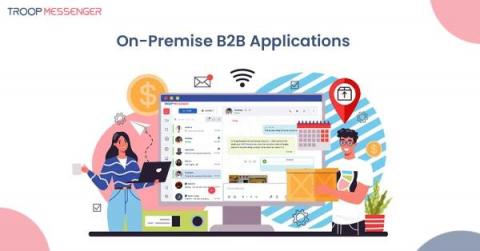
In this digital era, undoubtedly, it is safe and secure to employ self-hosted or on-premise B2B applications instead of depending on SaaS applications. Since the former gives complete security to your data without relying on a third party, whereas the latter may be secure but less effective and efficient than on-premise applications. You may think that most businesses depend heavily on SaaS applications.
When you give something a name, you make it real in a new way. Knowledge workers are seeing this firsthand with asynchronous work (or “async”), which is when team members work on the same project or problem but at different times instead of synchronously. Suddenly, the term is everywhere — but asynchronous work is more than a buzzword. Not just a by-product of the shift to remote or hybrid, it’s about strategically making new ways of working work.