

Teams | Collaboration | Customer Service | Project Management

The latest News and Information on Project Management, Methodologies, Productivity and Tools.

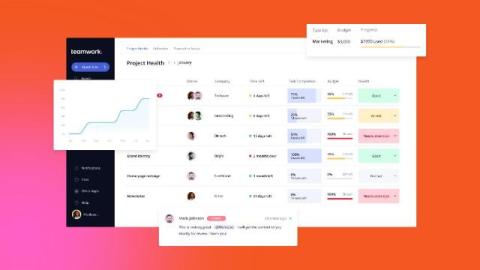
How to Track Essential Milestones in Data-Heavy Research Projects

Data-heavy research projects can involve large datasets, multiple researchers, several review stages, and changing requirements. Effective management uses clear progress tracking to stay aligned. Without a clear way to track progress, teams can lose sight of what has been completed. Moreover, they may miss upcoming tasks and deadlines. For data-heavy research projects, researchers ask how to track work with milestones.
The Pitman Schedule

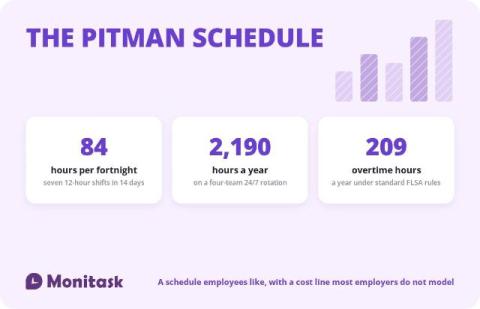
The Pitman schedule covers a 24/7 operation with four teams on 12-hour shifts, running a two on, two off, three on pattern across a 14-day cycle. Every team gets every other weekend off and never works more than three days in a row. It is popular for good reasons. It is also the schedule most likely to produce an overtime bill nobody budgeted, because 84 hours per fortnight means alternating 36-hour and 48-hour weeks, and the second one is over the federal threshold.

Biometric Time Clock

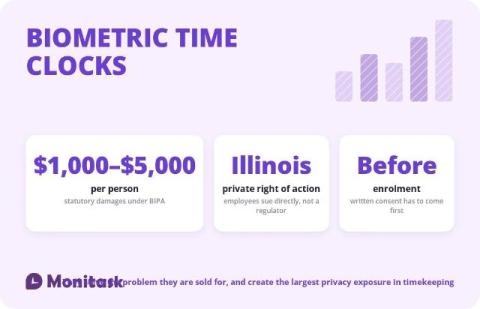
A biometric time clock identifies employees by a physical characteristic rather than by something they carry or remember: a fingerprint, a hand or face geometry scan, or occasionally an iris or voiceprint. Because a fingerprint cannot be handed to a colleague, it eliminates buddy punching in a way no badge or PIN can. That is the entire commercial case, and it is a good one.

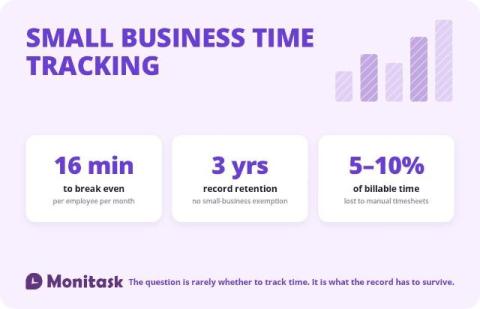
Small Business Time Tracking

Most guides to small business time tracking are lists of eight or ten tools. This one is not, because the tool matters less than two things nobody explains before selling you one. Record-keeping obligations do not scale with headcount. A business with three employees faces the same FLSA requirements as one with three hundred: hours worked each day, total hours each workweek, the day the workweek begins, kept for the required period. There is no small-business exemption. The economics are lopsided.

How to price professional services projects: the four-gate method

I have spent enough time in agencies to know how to price professional services projects badly. The reason most projects lose money has little to do with the pricing model on the proposal. It comes down to two things nobody systematises: what the work truly costs to deliver, and what happens to that cost after the client signs. This guide fixes both with a repeatable four-gate method.

Service business profitability: the five levers that actually move margin

In a services firm, your people are both the product and the cost, so service business profitability gets decided in five places at once. It's what you charge, what you collect, how much capacity you sell, who does the work and what the firm costs to run. This guide runs all five through one worked model. Then a Lever Sensitivity Test shows which lever to pull first, and it's rarely the one leaders reach for.

Project profitability analysis: find out why margin moved

A project's margin is an output: it's whatever is left once pricing, staffing, hours, scope and billing have all had their say. Project profitability analysis is the work of tracing that number back to the decisions that produced it. In this guide, I'll walk you through the Five-Lever Margin Bridge and a six-step review that prices each cause in dollars. Then we'll test both on a worked example that reconciles exactly.

How to reduce cost overruns on projects already in flight

Most advice on cost overruns is really advice about the next project. Estimate better, add contingency, tighten the SOW. All true, and none of it helps the project that's 40% delivered and 55% spent right now. This guide is about that project. You'll get a weekly check I call the Burn Gap Triage, three moves for closing the gap, and the delivery habits that stop small leaks becoming write-offs.