
Freshworks Chief People Officer Johanna Jackman on bringing HR onto Freshservice to streamline operations, improve employee experience, and unlock higher-impact work.
AI agents are only as good as what they know. Right now, most don’t know enough. Not because the AI is broken, but because the data is. Information is scattered across tools, siloed by department, stripped of the human context that makes it useful. Agents guess. They hallucinate. Teams splinter around different versions of the truth. Context isn’t a file or a ticket. It’s the space in between: why a decision was made, who owns it now, what broke last time.
AI is changing how engineering teams work faster than most organizations can adapt. Coding assistants are now part of the daily workflow, agents are starting to own tasks end-to-end, and the way we deliver software is being redefined in real time. With that shift, engineering leaders are facing a new set of questions. Are these tools actually improving outcomes? Where are they falling short? Which teams are seeing value, and which aren’t?
We’ve all been there – toggling between six tabs, copying content from one tool into another, and wondering if anyone actually read the brief. The promise of AI was supposed to fix this. Instead, most teams got a chatbot bolted onto the side of their screen. We think AI should work the way a great teammate does: show up where the work happens, understand what’s going on, and actually move things forward. Not from a separate window. Not after a five-paragraph prompt.
Teams of all stripes have run billions of cross‑functional, multi‑tool workflows on Atlassian. After decades spent helping them plan, build, ship, and do, those same workflows are now lighting up with millions of agentic automations, up 7x in the last six months alone. All signals point to the rise of the AI‑native organization, where humans operate at critical junctures, deciding what matters and why, and agents do more of the execution.
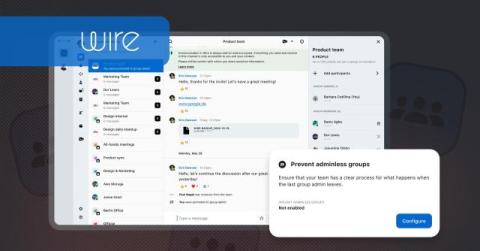
Secure communication at the VS-NfD level is not defined by a single feature. It depends on architectural choices, identity controls and operational discipline working together within a clearly defined scope. This section explains the technical foundations that enable secure digital collaboration in classified environments.
Digital collaboration has become the default way of working across business and government. Messaging, file sharing and real-time coordination are now central to how organizations operate. Yet for a long time, classified communication followed a very different path. For VS-NfD and similar classifications, secure communication traditionally relied on tools designed for a much earlier digital era. Phone calls, basic text messaging and highly constrained systems were often the only approved options.
Stop making headcount decisions on gut feeling. This guide walks operations and workforce leaders through capacity planning using real utilization data.