New guide: How to make external collaboration more secure, faster and more productive
How five Aussie companies have embraced Slack Connect to change the way they work with external partners, customers and vendors.


The latest News and Information on Collaboration, tools and related technologies.
How five Aussie companies have embraced Slack Connect to change the way they work with external partners, customers and vendors.
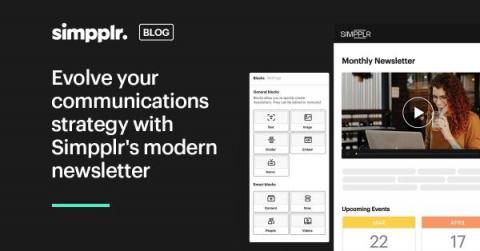
Whether you view email newsletters as a valuable vehicle for company-wide updates or as noise that weighs down your inbox, the fact is that email isn’t going away, and neither is using email newsletters for internal communications. If your primary method of employee communication is by email or email newsletters, you’re not alone.
There is no doubt that collaboration is the fuel that drives innovation and team productivity. And virtual whiteboard sessions, among other means, can significantly boost collaboration in remote work environments. Through virtual whiteboarding, teams across levels and locations can easily brainstorm ideas. Moreover, unlike analog whiteboards, virtual sessions capture discussions in the digital space, making them accessible for use after the session.
Security should be the utmost concern for all financial institutions for various reasons. Top on the list is to protect customer and client assets. By strengthening cybersecurity measures, financial companies can ensure that customer data is protected — eventually securing trust from stakeholders. This calls for financial boards to integrate advanced security measures across all governance practices, including meetings and data management.
In business, meetings can feel like wasted time more often than not. It’s true that no team gets anywhere without a collaborative spirit and tight lines of communication. But there’s a reason for the saying, “too many cooks spoil the broth.” Trying to engage everyone in everything with no process and structure for doing so can lead to stagnation.
Hybrid collaboration is complex. It’s not just about “in the office” or “not in the office” — it’s also about leadership, connection, creativity, and the technology that enables your teams to adapt. Over 77% of companies have adopted a hybrid work model, but how can executive leadership optimize it for their teams? Here’s some of the lessons we’ve learned to help leaders cultivate hybrid collaboration.
The term ’digital transformation‘ is a lot like love. It means different things depending on who you ask. IBM, a long-standing technology leader, offers this mouthful: “us AI, automation, hybrid cloud and other digital technologies to leverage data and drive intelligent workflows, faster and smarter decision-making, and real-time response to market disruptions.” Still kind of nebulous, huh?
Great things happen when teams see the value of their work. But often, strategic initiatives are disconnected from day-to-day projects, leaving employees uncertain about their top priorities. According to the 2022 Anatomy of Work Index, nearly 1 in 3 employees can’t see a clear link between their day-to-day efforts and their company’s goals. To fulfill an organization’s mission and be effective, teams must have clarity about their goals and what’s needed to achieve them.