
Teams | Collaboration | Customer Service | Project Management

Challenges in Achieving DORA Compliance

Despite DORA’s clear structure, achieving compliance is far from straightforward. From aligning ICT contracts to building effective incident reporting systems, organizations must navigate significant technical and legal hurdles. To help cut through the complexity, this article shares insights about the Digital Operational Resilience Act (DORA), developed in collaboration with Reuschlaw, a leading legal advisor in EU regulatory compliance.

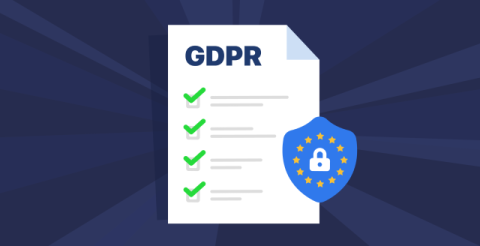
Stay Compliant: GDPR Messaging Apps That Prioritize Privacy First

Data security often feels like that overly cautious colleague who locks up everything – even the stapler. But when it comes to protecting sensitive information, they’re not wrong. If your team uses messaging apps to collaborate, share files, or brainstorm ideas, you’re already handling personal data more often than you think. Names, emails, project details – it’s all part of the mix.

Are you ready for CSRD - the EU Sustainability Reporting Directive?

The new EU Corporate Sustainability Reporting Directive (CSRD) has rapidly become a focal point at management meetings throughout Europe. This is unsurprising, as the CSRD is a comprehensive directive mandating companies across various industries to report their sustainability impacts in unprecedented detail and transparency. It encompasses requirements on everything from environmental targets to social factors and compliance – obligations that companies cannot afford to overlook.

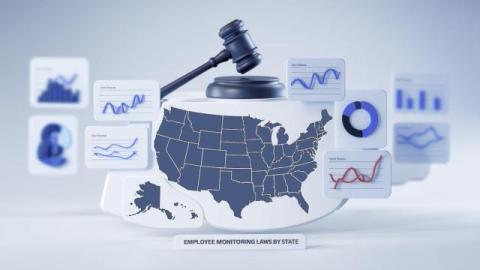
Employee Monitoring Laws Explained: Federal vs. State Regulations

Say you track the computer activities that your employees know about. You have a member from Florida for whom the digital workplace policies don't matter much. Now, you are hiring a remote worker from Delaware for your team. You want to monitor your newbie. You may be unaware that employers in Delaware need the employees' consent before monitoring. Pretty confusing, right? You hire both employees from the U.S., but employee privacy rights vary from state to state.

EU NIS Directive vs GDPR: 3 key differences and why compliance matters

‍ The EU NIS Directive (NIS2) and GDPR are critical frameworks designed to protect an organization’s infrastructure and secure personal communication and data. While the former focuses on network and information system security, GDPR mainly concentrates on personal data protection.

Your quick-start guide to GDPR compliance in 2024

What do TikTok, Amazon, Meta and Google have in common with H&M, British Airways and Marriott International? Don’t worry. This isn’t a brain teaser. The answer is that all these household brands are paying hefty fines for GDPR compliance violations after mishandling personal data. In Meta’s case, we tallied nearly $2.5 billion (€2.277 billion) in fines since early 2022, including one record-breaking $1.3 (€1.2) billion infringement.

8 features to roll out the EU Working Time Directive seamlessly

Behind every successful and profitable company is a clear understanding of how and where their time is being spent. It’s safe to say time is the heartbeat of what you do, and what we do at Teamwork.com. In 2019, the European Union (EU) introduced a directive requiring all employers within EU member states to implement time tracking systems for their employees. While full implementation of the directive is up to individual member states, we can definitely get on board with mandated time tracking!

The EU Working Time Directive: Everything you need to know

In today’s fast-paced world, achieving a healthy work-life balance is more important than ever. When work consistently encroaches on personal time, it can take its toll on employees’ physical and mental health–not to mention its impact on business performance. A big part of achieving this balance is making sure people have enough time for leisure without having to work long hours.

EU's Chat Control puts security and privacy at risk

Since it was first proposed, the EU’s Regulation to prevent and combat child sexual abuse (aka Chat Control) has gained the attention of security experts, academics, civil society, and the private sector for all the wrong reasons. Early versions of the Commission's proposal included requirements for media scanning and effectively entail the mass surveillance of Europeans.

EU AI act: GenAI solutions that rely on trusted, internal data are key to compliance with new legislation

The EU parliament has approved its AI act, the world’s first recognized set of rules designed to regulate this technology. Under the act, AI solutions will be divided into risk categories, including an ‘unacceptable’ tier that will see models that pose systemic risk banned. The bill will come into force 12 months after it is made law and is subject to formal approval from ministers of EU member states.