

Teams | Collaboration | Customer Service | Project Management

Workforce intelligence platform: What it is, how it works, and what to look for

Most managers already know something is off. The team looks busy but keeps missing deadlines, a project that ran over hours with no clear reason why, a star performer who quietly disengages before anyone notices. All of this can be explained and the data for it already exists. It’s sitting in your attendance system, your project tracker, your calendar, your timesheets. The issue with this data is that it is spread across tools that never talk to each other.

What is a timesheet? Meaning, uses, and how it works

When your team works, those hours need to be tracked so employees get paid correctly, clients get billed accurately, and you know how much a project actually costs. A timesheet is just the tool that makes sure those hours don’t get lost. Many businesses don’t take it very seriously. They either guess the time, use lump-sum timings and track it manually, but it is risky. When companies guess or use messy paper tracking, they make mistakes.

HR automation for tech startup scaling team

Every tech startup understands technical debt. In the early days, teams move fast, ship quickly, and accept a few messy shortcuts because speed matters more than structure. But there is another kind of debt that quietly grows within fast-moving startups: HR debt. At 30 employees, manual HR feels normal. A founder answers policy questions in Slack. An operations lead handles onboarding.

How to handle scope creep before it wrecks your margins

Scope creep doesn't announce itself. It shows up as "a small tweak" here and "one more round of revisions" there. By the time you notice, the project that was supposed to be profitable is bleeding money. I've spent years managing projects inside professional services firms and now at Teamwork.com. The pattern is always the same: small, untracked additions that seem harmless but collectively eat the entire margin.

The future of agency operations isn't about AI. It's about control.

I spent a day in New York with agency leaders, operators, and industry experts at OPERATE'26, Teamwork.com's inaugural Agency Leaders Summit. The conversations covered scaling, profitability, AI, talent, and leadership. But the strongest takeaway wasn't fear about the future. It was optimism. Here's what the day kept coming back to.

Best Employee Communication App for Teams and Businesses in 2026

The best employee communication app in 2026 is the one that reaches every member of your workforce — desk-based and frontline alike — through a single secure platform that works on any device. Poor internal communication costs businesses time, money, and people. When updates get buried in email, decisions happen in personal WhatsApp groups, and frontline workers are the last to know about anything important — productivity suffers and trust erodes. This guide covers.

Stop Updating Your Slides by Hand: How to Auto-Update Google Slides with an MCP Server

Picture this: it's Monday morning, town hall is at 2 pm, and someone has sent the usual calendar reminder: "Don't forget to update the weekly support deck!" You open the slide, look at last week's numbers still sitting there, and start the ritual. Open Zendesk. Find the right report. Check the date filter. Copy the number. Switch to Slides. Find the right text box. Paste. Repeat fifteen times. Silently wish you were somewhere else. You tried delegating it to an intern once.

Government communication platforms: what agencies need to know in 2026

‍ Government communication shapes how agencies coordinate internally, how departments collaborate across boundaries, and how public institutions engage with the citizens they serve. When it fails — through insecure tools, fragmented systems, or non-compliant platforms — the consequences range from operational breakdown to regulatory liability. This article covers the most widely used government communication platforms across messaging, video conferencing, and citizen engagement.

AI chatbot for HR compliance and policy enforcement

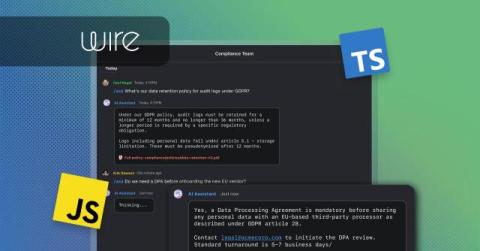
HR compliance is often treated as a documentation exercise: write the policy, update the handbook, send an annual reminder, and collect acknowledgments. In practice, compliance depends on something harder to control: whether employees can understand the right rule, follow the right process, and take the right action when a question comes up.