

The ability to unify all notification metrics and logs across channels and providers into an easy-to-use dashboard is a core advantage of Courier’s notification infrastructure. However, with product notifications so critical to the entire application experience, it’s important to connect that data back to central cloud observability platforms that look across the entire stack.
We are thrilled to announce the release of our first client-side SDK for Courier, written for JavaScript. This new addition expands our existing SDK offerings, which include Java, Python, Node, Go, Ruby, and PHP, and makes it even easier for developers to integrate Courier into their projects.
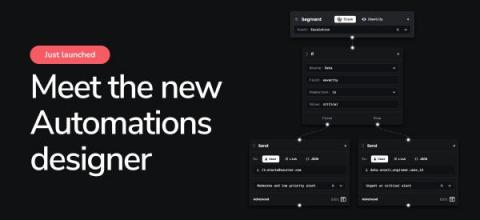
Courier Automations lets you build smart notification workflows. With Automations, notifications can be scheduled, driven by events, canceled, and more. We’ve just completed a big redesign of the automations UI — before this overhaul, notifications were restricted to linear workflows. This made it difficult to build more advanced automations, however the new automations UI, based on React Flow, allows you to build more sophisticated workflows, including those requiring branching logic.
Sign up for Courier!
https://bit.ly/42rL16m
Follow our Host
Follow Shreya: https://twitter.com/shreythecray
Push notifications are a valuable tool for keeping users informed and increasing their engagement with your app. You can use push notifications to alert users about promotions, new content, or any other important updates. While push notifications are a powerful tool, setting up push notifications in iOS can be a daunting task that requires a significant amount of effort and time. Fortunately, the Courier iOS Mobile Notifications Software Development Kit (SDK) simplifies this process.
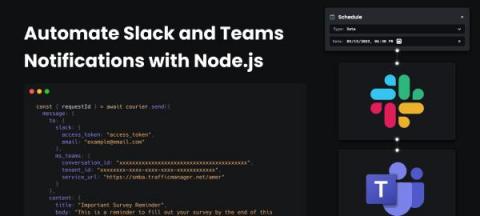
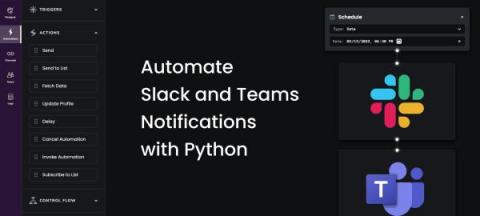
There are ways to integrate cross-channel notifications via individual APIs, but we’re here to provide you with a quick guide to send across your preferred channels in one single API call. This guide will focus on sending and automating messages via Slack, MS Teams, and any other channel of your choice from your Node.js applications. You can also automate Slack and Microsoft Teams notifications using Python. This blog is a comprehensive setup guide.
Push notifications have become an essential part of modern mobile apps, allowing you to keep your users engaged and informed. However, implementing push for different platforms can be a complex and time-consuming task, requiring developers to set up and handle token management, testing, and other logistical details.
Sign up for Courier!
https://bit.ly/3yGsF43
Follow our Hosts
Follow Shreya: https://twitter.com/shreythecray
Follow Riley: https://www.linkedin.com/in/rileylnapier/
Messaging apps are essential for internal collaboration and critical notifications such as reminders, alerts, and other time-sensitive updates. While integrating with the Slack and Microsoft APIs is fairly straightforward, implementing these tools as a part of a full-featured notification system that embeds with your app experience can be far more daunting.