
Teams | Collaboration | Customer Service | Project Management

How to Send Firebase Notifications to iOS Devices Using Courier

Firebase offers useful SDKs for both iOS and Android apps. It provides database services, analytics, and push notification tools. It also works with most programming languages, including Swift. If you're reading this article, you've probably already come across Firebase and its Cloud Messaging tool, which can be used to send push notifications to both Android and iOS devices.


Toast messages, their use cases, and examples

In-app messages are becoming increasingly popular as a method for products to communicate with their users. The tools for sending those messages are maturing and certain standards are becoming expected for specific types of messaging. One such standard is the toast message, a short-lived note that gives the user some feedback or direction.

How to Choose the Right SMS API for Your Project

SMS is the most reliable and highly-read notification channel, making it a popular choice for developers who want their systems to send notifications to their users. If you’ve got an application that needs to send out short, important, time-sensitive messages, you should consider integrating an SMS API into your system to help you handle this. In this article, we explain how to choose the right SMS API provider for your needs.

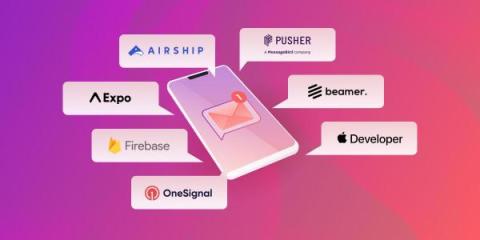
Top 7 Push Notification APIs

Most people who interact regularly with smartphones and tablets are familiar with what a push notification is. They want their calendar application to post an alert to their mobile or desktop interface, for example, whether or not they have the app open or their screen locked. If they want to change when, how, or if they receive notifications at all, they simply adjust those in the application settings. For app developers, push notifications are a great way to keep users engaged with a product.

Mastering Android Push Notifications: A Guide Using Courier's SDK

Push notifications play a critical role in our digital world. They’re an essential tool for driving user engagement, ensuring retention, and delivering real-time updates, but implementing them in Android can be a complex task. Engineering teams are tasked with not only the technical implementation but also the logic that encompasses the entire notification experience.

In-App Messages vs Push Notifications: The Differences and When to Use Them

In both the Android and iOS ecosystems, push notifications have carved out a place as effective tools to capture users’ attention and draw them back into your app. Yet, beyond the mobile realm, browser and desktop notifications serve as their underexplored counterparts. They, too, can be leveraged to maintain user engagement and interaction, particularly within the context of web applications.

Building In-App Notifications for Web and Mobile Applications

If you’re a developer building a web or mobile application, you know that there are times when you want to message your users when they’re in the app. It might be information about a new feature, a billing update, or something that requires action from the user. That’s where in-app notifications via an inbox come in. They allow you to deliver key messages directly to your users and can be combined with other notification methods like push and email.

A Developer's Guide to Notification APIs

While marketing-related notifications are often handled by marketing automation platforms, engineering teams require notification infrastructure that is designed for automated product-driven notifications. This might be a simple SMS password reset notification or new user onboarding email sequence. Or it may be a more complex notification tied to a feature of the application, such as an approval request sequence.