Teramind Named in the Gartner 2020 "How to Choose Between Enterprise DLP and Integrated DLP Approaches" Report

The Report Sheds Light on Data Loss Prevention Challenges and Identifies the Use Cases for Integrated DLP vs. Enterprise DLP Solutions. A recent report published by Gartner titled “How to Choose Between Enterprise DLP and Integrated DLP Approaches” (Gartner subscription required) found that “the data loss prevention market includes products with DLP capabilities integrated in security products or SaaS applications, as well as cohesive enterprise DLP suites.

How to Build a Remote Security Mindset

Millions of employees are now working from home as a result of the COVID-19 pandemic. Meanwhile, business is booming for cybercriminals: We’re seeing a recent and unprecedented surge in successful cyberattacks. Worse, the cost of those attacks is climbing exponentially and is expected to hit as much as $6 trillion annually by next year. To address the problem, executives must reexamine their assumptions about security and the systems they have relied upon in the past.

COVID-19: Accelerating the Future of Work

As remote work becomes the 'new normal' for many around the world, the security threats resulting from the rapidly changing work conditions are posing an unprecedented challenge for businesses. The immediate need to shift work conditions left organizations scrambling to institute remote working policies with many executives unprepared to roll out the right tools and procedures securely and at scale. However, for companies it's not just about being prepared for a global pandemic.

Video Conferencing - A trade-off between Privacy and Usability?

Zoom is currently undergoing a lawsuit regarding illegally disclosing user data to third parties, including Facebook. “According to the suit, Zoom’s privacy policy doesn’t explain to users that its app contains code that discloses information to Facebook and potentially other third parties.” What lessons should companies take away when investing in tools like zoom?

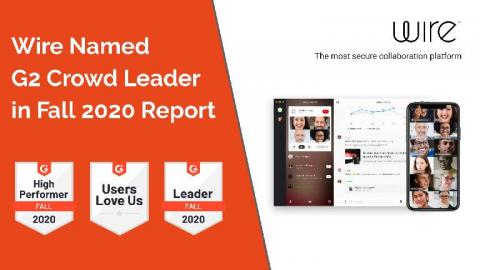
Wire named High Performer in G2 Crowd

First - a big thank you to all of our customers and partners who continuously show support and share their experience using Wire. When we launched Wire as the most secure collaboration platform, we were hoping the reception of the platform would be positive. We were not expecting to move from "Niche Vendor" to High Performer in such a short time.

5 Remote Working Best Practices and Tips in the Era of Coronavirus Pandemics

Due to COVID-19, companies have found themselves in the middle of the world’s largest work-from-home experiment. Many hail remote work as a blessing, allowing employees to continue working while practicing social distancing during this uncertain time. Of course, even before coronavirus grabbed our attention, many companies were already adapting various telecommuting and remote work policies.

How to spot a phishing attack

The average office worker receives 121 emails per day. When faced with information overload such as this, it can be easy to let your guard down and fall for a phishing attack. Phishing is one of the largest security threats out there. They take many different forms and often resemble the types of communications you receive every day — internal team communications, special offers from your favorite companies, or specific emails that pertain to your role (support tickets, leads, incidents, etc.).

Teamwork achieves SOC 2 Type 1 certification

We wanted to share some exciting news: we’ve successfully completed our SOC 2 Type 1 audit! We embarked on this audit as part of our ongoing commitment to delivering the most robust and professional experience to our users. Service Organization Control (SOC) 2 is a procedure designed to ensure that service providers can securely manage data to protect the interests and privacy of their clients.

The Mobility of Workforce

In recent years, remote working has risen sharply, with a 27.7% increase in the number of home-workers in the last decade alone. A mobile workforce means that a business' data is also ‘mobile’. Data, whether it is emails, ideas, contracts or plans, is the life-blood of most modern businesses; it is their intellectual property (IP). Without this data, there would be no product, no service, no sales.