
Teams | Collaboration | Customer Service | Project Management

Best HR Automation Tools in 2026 | AI HR Software Guide

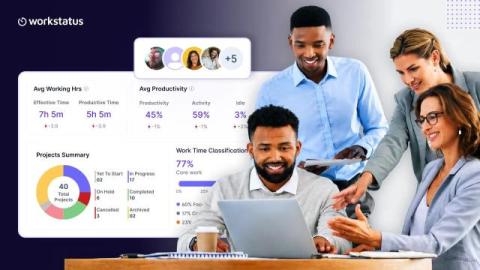
HR automation tools in 2026 have moved far beyond simple payroll processing and onboarding checklists. Today, organizations evaluating HR automation tools are looking for platforms that can streamline operations, reduce manual effort, and improve theemployee experience at scale. However, not all HR automation software offers the same capabilities. Some solutions act as systems of record, managing employee data, payroll, and compliance.

WhatsApp Ticketing System: How to Set it up With InvGate Service Management

Employees rarely think in terms of “support channels.” They use whatever tool is closest at hand — email, direct messages in collaboration apps, and also WhatsApp: it’s fast, familiar, and already part of their day. For support teams, though, those messages often turn into scattered conversations, missed requests, and follow-ups spread across personal and shared phones. Trying to keep up by constantly checking chats doesn’t scale.

5 ways to help employees upskill for AI

Forty-one percent of employees are struggling to fit AI into their daily workflows. It’s got nothing to do with technology and everything to do with management. That’s the finding of a recent Gartner report, The Human-AI Workforce Journey: 5 Steps for CIOs to Accelerate AI-Readiness, which you can download now for free. The most surprising stat? Only 6% of individual contributors have received guidance on the AI skills they need to develop.

Effortless Knowledge Creation: AI-Powered Article Generation

Your team’s knowledge is a valuable asset. In OneDesk, your knowledge base provides a self-service hub for your customers (or agents!) to find solutions. Every resolved ticket contains information that could help the next customer, and the one after that. But documenting solutions, managing knowledge, and creating articles takes a lot of time.

How To Identify Process Improvement Opportunities

Every organization has workflows that could work better, faster, or cheaper — but figuring out where to focus is the hard part. Knowing how to identify process improvement opportunities is the difference between companies that adapt and those that stagnate. Whether you’re dealing with bottlenecks in production, bloated approval chains, or rising customer complaints, the ability to pinpoint and fix what’s broken is a core competitive skill.

How to Deploy Self-Hosted Applications on AWS: A Step-by-Step Guide

The traditional ‘Cloud vs. On-Premise’ debate has seen a significant paradigm shift. In the year 2026, it is not necessary for organizations to choose between being completely dependent on the cloud or running costly physical servers within their office data centers. A new trend has emerged, where organizations are opting to use a strategic ‘middle path.’ This involves running on-premise style applications on AWS infrastructure.

Top Reasons to Choose On-Premise Servers Over Cloud in 2026

In recent years, many organizations have turned to cloud platforms because of their flexibility, scalability, and convenience. But with the rising threat of cyber attacks and the importance of data privacy, organizations have begun to realize that perhaps the best place for their communication systems to be located is not in the cloud at all. In 2026, organizations that require high security for their communication systems have turned to on-premise servers.