Managing a distributed team involves much more than tracking when employees clock in and out. Businesses need accurate timesheets, productivity visibility, reliable payroll data, and a clear understanding of how employee hours translate into project costs and client revenue. The challenge is connecting these workflows without creating additional administrative work.
Few pieces of EU legislation have been declared dead as often as Chat Control, and few have returned as reliably. In July 2026 a scanning law that more MEPs voted against than for came back into force. On 29 September 2026 negotiators meet again to decide the shape of the permanent regulation. The outcome affects ministries, armed forces, defence suppliers and energy operators, because it determines how much control they keep over who can read their communications.
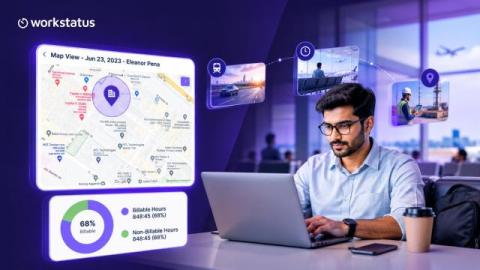
Your field team can work a full day without earning a full day. This blog shows you how to find the hours that slip away between jobs and turn them back into billable capacity. Travel takes a share of the day. Waiting takes another. Scheduling gaps take what is left. None of it looks like a problem while it happens. A technician drives to a site. A customer runs late. A part does not arrive. Each moment feels small and reasonable. By Friday, all of it lands in one number on your timesheet: hours worked.
Most teams don’t necessarily have a communication problem, but they do have a communication volume problem. Slack pings, email threads, status update requests, hour-long calls, three tools tracking the same task... they all eat up the day. Research backs this claim up.
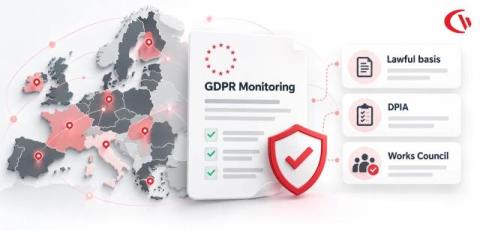
When using employee computer monitoring software across the European Union (EU), companies have to find a balance between two legitimate, yet conflicting, aims: the safeguarding of corporate networks, know-how and confidential data on the one hand, and the preservation of employees’ privacy and fundamental rights on the other.
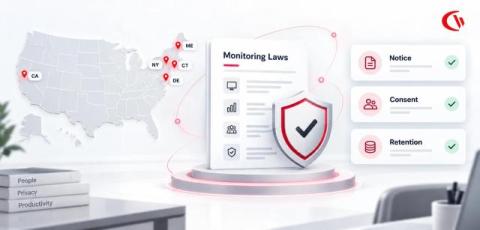
The location from which employees log in remained the same with the introduction of hybrid working; instead, it was the level of visibility that employers believed was necessary and the amount of scrutiny that this visibility drew that changed. In six states, laws require notice and consent for workplace monitoring; in Connecticut, rules became stricter on October 1, and Maine’s new law took effect this July.
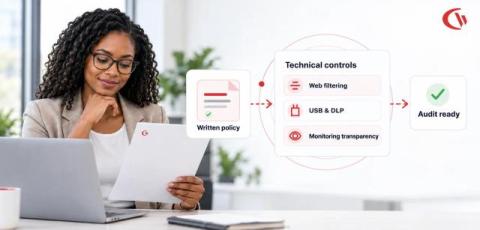
Just providing employees with laptops and VPNs will not be sufficient for protecting a distributed workforce in 2026; IT managers will also have to put in place a framework, that is, a written agreement which outlines network access, the rules concerning data loss prevention (DLP), and the way in which employees are to be monitored so as to take into account both security issues and the legal nuances of current state privacy laws.