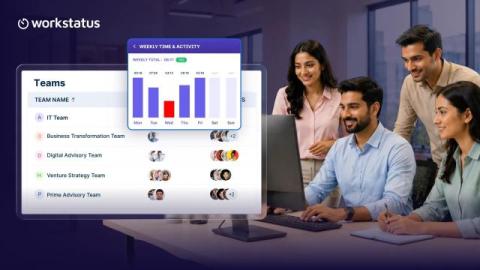
Remote employee monitoring software gives managers visibility into time, activity, and work patterns while helping teams connect productivity data with meaningful business outcomes.
The past couple of years have changed how my team operates. We’ve experimented, adjusted quickly, and seen meaningful early results. That momentum got me excited about where marketing is headed in the age of AI, even as we continue learning along the way. Since then, we’ve witnessed what holds companies back from succeeding with AI.
A new employee starts on Monday. HR has already added them to the HR system, but IT is still waiting for a ticket. Their email account is ready, yet they cannot access the VPN, shared folders, Salesforce, Jira, or the applications their team uses every day. By lunchtime, the employee is messaging their manager. The manager is following up with IT, while IT checks several systems to find out which requests were completed and which were missed.
Evidence-based time tracking is a time-logging method where every recorded hour is backed by verifiable proof screenshots, active URLs, or app activity instead of relying on self-reported numbers alone.
Ask IC practitioners why their measurement efforts stall, and they might point to their digital resources. The real culprits sit one level beneath the technology: no shared definition of success and no clear ownership. Without those, even good infrastructure ends up held together by manual exports and a prayer. Get that foundation in place, and the right tools will have something to plug into.
AI workplace communication is transforming how modern teams connect, collaborate, and share information. From drafting messages and summarizing meetings to translating conversations and organizing knowledge, AI workplace communication tools are helping employees communicate faster and work more efficiently. As remote and hybrid workplaces continue to grow, teams often deal with overflowing messages, lengthy meetings, scattered information, and communication across different time zones and languages.
Secure business communications are essential for protecting sensitive information, maintaining customer trust, and reducing cybersecurity risks. As cyber threats continue to evolve, businesses need secure business communications to safeguard their internal and external conversations. From business emails and messaging platforms to file transfers and mobile devices, every communication channel can become a potential security risk if it is not properly protected.
Every IT leader has lived this moment. The week ended; everyone was visibly engaged, meetings happened, tickets moved, and projects progressed. Then someone asks, “What exactly got accomplished this week?” and the answer isn’t as clear as it should be. For service businesses, this is not a small gap. When work hours are not connected to project outcomes, small inefficiencies build up quietly, and they rarely stay small for long.
A new hire accepts your offer, but their laptop arrives late, application access is missing, and their manager assumes HR has handled everything. By the end of the first week, the employee is frustrated and HR is chasing five different teams. That disorganization affects more than the first-day experience. Gallup reports that only 12% of employees strongly agree their organization does a great job of onboarding, while many employees can take 12 months or longer to become fully effective in a role.
@mention an agent on any page and it creates, edits, and comments alongside your team. Through the Atlassian Rovo MCP, the same agents work from Claude, Cursor, or your IDE. Agents have been working in Confluence since we launched custom agents in May 2024, and teams now run more than 5 million agent invocations a month. In February alone, Agents saved Atlassian customers more than 200,000 hours.