

Teams | Collaboration | Customer Service | Project Management

What's new in Asana | March 2024

Welcome to the March edition of What’s New in Asana. First, easily share projects with the right groups with the addition of the “share with organization” privacy setting. Next, sort portfolios by connected goals to highlight work related to those goals. Finally, add actual time as an effort field in Workload. You can also compare it to the estimated time.

How Asana uses Asana to streamline project intake processes

For Jana Beiswenger, Head of Business Program Management at Asana, work intake is hugely cross-functional. Her team focuses on business transformation—in other words, making Asana a more effective organization. To do that she needs to align teams around the right strategic programs and ensure Asana has enough resources to achieve business-critical goals. “My role is about creating the right focus holistically so we can execute as a team.

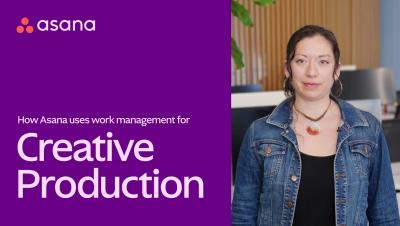
How Asana uses work management for smoother creative production

For Tara Vajra, Head of Creative Operations at Asana, creative production is a tight balancing act. Her role requires her to constantly measure existing resources against new requests and larger marketing goals. This is especially tricky at a global company, where she needs to produce assets that work across cultures and partner with stakeholders who live around the world.

How to use benchmarking to set your standards for success

How do you know when your work is successful? Benchmarking is a data-driven process that helps you create your own standards to measure success. Setting benchmarks is a simple way to set clear expectations for your team. In this article, learn the different types of benchmarking and the steps to create your own benchmarks. Success is a vague term—what is it? And how do you know when you, your projects, and your business are successful? The truth is, everyone measures their success differently.

What is self-management? (7 skills to improve it)

Self-management is your ability to regulate behaviors, thoughts, and emotions in a way that better serves you and your work. Learn the 7 most important self-management skills to become a better leader. Developing self-management is an introspective process. It requires an honest deep dive into your own emotional intelligence, self control, and leadership style where you discover how much you actually regulate yourself. It’s certainly not easy, but self-management can be learned.

Don't like giving feedback? These 20 tips are for you

Giving effective feedback is a critical skill for all team members to have. In this article, we cover 11 best practices for giving any type of feedback. Plus, get four tips to give feedback as a team manager, and five steps to give upwards feedback to a manager or leader. If you’re uncomfortable giving feedback, you’re not alone. Even though feedback is a critical part of effective workplace communication, a lot of us don’t know how to approach feedback in a constructive way.

6 steps for writing a persuasive project proposal

A project proposal is a written document outlining everything stakeholders should know about a project, including the timeline, budget, objectives, and goals. Your project proposal should summarize your project details and sell your idea so stakeholders buy in to the initiative. In this guide, we’ll teach you how to write a project proposal so you can win approval and succeed at work.

9 steps to craft a successful go-to-market (GTM) strategy

A go-to-market (GTM) strategy is a step-by-step plan for launching a new product or expanding into a new market. It helps you launch your product to the right audience, with the right messaging, at the right time. Learn how to craft a go-to-market strategy in nine steps and set your next product launch up for success.

Performance evaluation template, with examples and tips

A performance evaluation is a formal check-in process used to evaluate team members progress. Though evaluations can be stressful, a performance evaluation template can help standardize the process. When your team member knows exactly what you’ll be discussing, they’re able to prepare and have a more productive conversation. Plus, if you pair evaluations with goal-setting, you can focus the conversation not just on current impact but also on future goals.

How to conduct an exit interview: Template and examples

An exit interview is a conversation between a company and an employee who chooses to leave the company. When you create a safe environment for team members to give honest feedback, you’ll gain insight into how your company can improve. Learn how to perform an exit interview effectively so you can make the most of the experience. When a team member leaves your company for a new role, there’s an opportunity to learn why.