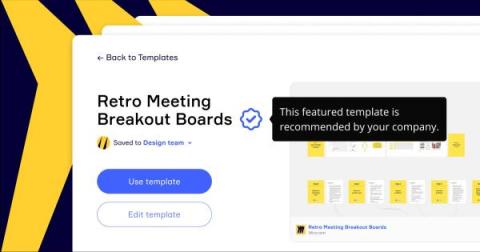


Creating a new board from scratch can be time-consuming and results in a divergence of inconsistencies from the look and feel to methodology across projects. Custom templates help solve these challenges by providing a standardized starting point for your team’s work in Miro.
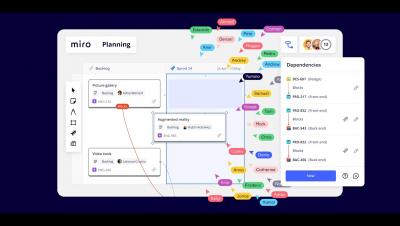
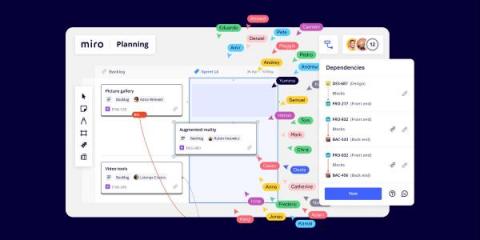
Whether you call it program increment (PI) planning, quarterly planning for product teams, or even big room planning, the reality is the same: These sessions are complex undertakings, even more so in our current hybrid reality. Every 8-12 weeks, dozens, hundreds, or — in some cases — thousands of product team members meet to to align on a shared vision, pinpoint cross-team dependencies, discuss features, and, ultimately, plan their product roadmap.
Creativity can be scary. Team members worry about being judged for an idea that is too out there, or they might be nervous about trying and failing. This temptation to stick with tried-and-true approaches is kryptonite for creative thinking — and it’s not just in your head. In fact, 85% of CEOs believe fear stands in the way of their company’s ability to innovate. But why?
This year, organizations will spend trillions of dollars to bring innovative products to market. However, most leaders are dissatisfied with current ways of working and their company’s ability to support such innovation. Adopting tools that help teams align against strategy, deliver on customer needs, and engage workers will be critical to competing in the modern market.
Small updates, big impact — that’s April’s new feature round-up in a nutshell. We hope they’ll make your Miro workflows that much more seamless, especially if your job is to build new products and you’re looking to collaborate, run sprints, or ship a feature much faster. Read on to see how you can integrate Miro’s newest features, from Private Mode to Card Panels, into your workflow.
HP Inc. (formerly Hewlett-Packard) provides products and services across a range of sectors worldwide. With over 80 years in the industry, HP inspires meaningful progress in climate action, human rights, and digital equity through its portfolio of personal systems, printers, and 3D printing solutions. HP continues to innovate and adapt its products to the changing work climate through sustainable tech and software to support hybrid work.