
Teams | Collaboration | Customer Service | Project Management

How Employee Engagement Impacts Call Center Productivity: A Manager's Guide

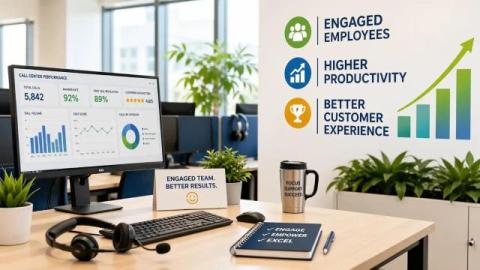
Have you been noticing that your call center numbers are slipping? Average Handle Time (AHT) is climbing, and First Contact Resolution (FCR) is dropping. But you can’t pinpoint why. Well, don’t mistake thinking that it’s a process or technology issue. Instead, it’s the engagement. To get more clarity, you must understand how employee engagement impacts call center productivity. Up next, I’ll explain what engagement means in a call center and the impact on productivity.
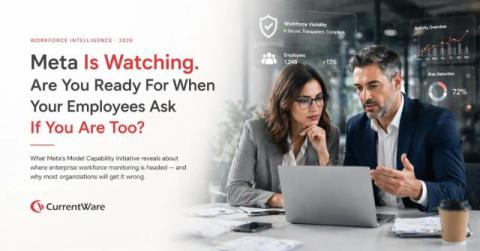
Meta Is Watching. Are You Ready For When Your Employees Ask If You Are Too?

Meta made headlines this week when Reuters reported the company is installing tracking software on U.S. employee computers, capturing mouse movements, clicks, keystrokes, and periodic screen snapshots as training data for its AI models. The program, called the Model Capability Initiative, sits inside Meta's broader push to build AI agents capable of performing knowledge work autonomously. Meta was quick to add a qualifier: the data will not be used for performance evaluations.

Hidden Factors Affecting Employee Productivity (And How to Improve Them Quickly)

Employee productivity is often seen as a direct result of effort, but in reality, it’s shaped by a range of underlying factors that aren’t always visible. A team may appear busy, yet still struggle to deliver consistent results. Deadlines slip, quality drops, and engagement slowly declines. The issue usually isn’t a lack of effort; it’s a lack of clarity around what’s actually affecting performance. Many of these productivity barriers go unnoticed.

Track Tools Your Team Uses with Smart Software Usage Tracking

Software costs are rising, yet many businesses still don’t have a clear view of how their tools are actually used. Licenses go underutilized, teams juggle overlapping apps, and decisions are often based on assumptions rather than data. That’s where software usage tracking comes in. At its core, software usage tracking helps businesses understand which tools employees use, how often they use them, and whether those tools truly add value.

Powerful Ways Companies Monitor Remote Employees (Without Micromanaging)

The shift to remote and hybrid work has reshaped how companies manage performance, productivity, and collaboration. While employees enjoy flexibility, organizations often face challenges in ensuring accountability. There is a lack of balance in workloads, falling into the trap of constant micromanagement. Striking the right balance between trust and transparency has become the cornerstone of effective remote team management. That’s where remote employee monitoring comes in.

High-Performance Employee Behaviors Every Manager Must Track (To Spot Top Talent Fast)

The true measure of a high-performing employee goes beyond output. It lies in the behavior of employee patterns that consistently drive results. While metrics like deadlines and deliverables offer surface-level insights, it’s the underlying work behaviors and daily actions that reveal who your real top performers are. As per stats.

What Does Hybrid Remote Work Mean? The 2026 Guide Every Business Needs to Read

Work has changed, but many companies are still trying to define what that change actually looks like. Some teams are fully remote. Others are back in the office. But most businesses today are somewhere in between, trying to balance flexibility with productivity. That’s where the meaning of hybrid remote work becomes important. At a glance, hybrid work sounds simple. In reality, it’s one of the most misunderstood workplace models.

You Think Hiring Is Enough? Here's Why Workforce Planning Is Important in 2026

Hiring alone won’t future-proof your business, especially in a world shaped by AI, remote work, and constant disruption. In 2026, organizations need more than just talent acquisition; they need a clear strategy to ensure the right people, with the right skills, are in the right roles at the right time. That’s where workforce planning becomes a critical driver of growth, efficiency, and resilience.