
Teams | Collaboration | Customer Service | Project Management

Pydio v5.1: Gain More Control Over Tag Cloud Metadata

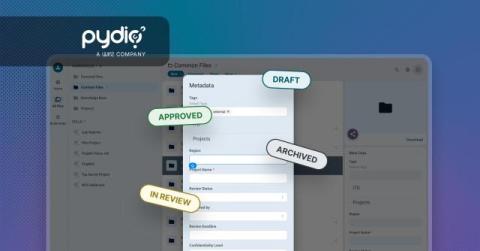
Tag Cloud metadata fields are meant to make files easier to find, but only if the values in them stay consistent. Left open-ended, they tend to fill up with near-duplicates and typos ("Marketing," "marketing," "Mkt") that quietly undermine search and filtering. Pydio v5.1 gives administrators a way to fix that: you can now define and restrict which values are available in Tag Cloud fields, so users pick from a controlled list instead of typing free text.

Open Source Collaboration Software: Types, Tools & How to Choose

Open source collaboration software gives organizations more control over how teams communicate, share files, manage projects, and work together. However, the category covers a wide range of tools, and the right choice depends on what your teams need to accomplish and how much control your organization needs over its data and security. In this guide, we’ll explain the main types of open source collaboration software, the features to look for, and the best tools for different collaboration needs.

New Wire Drive Function: See Exactly How Much Storage Your Team Is Using

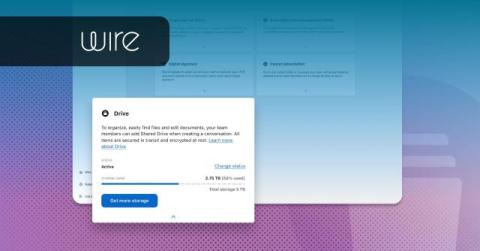
As teams share more files inside Wire Drive, one question keeps coming up: how much storage are we actually using? Today, we're answering it. Wire Drive now gives team admins a clear view of storage usage right in Team Management. A simple addition with a clear goal: better visibility, without added complexity.

Any App, Any Team: Build Once, Share With Every Team on Wire

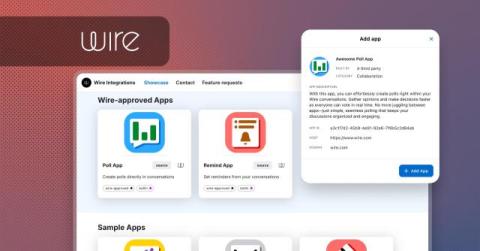
Build an app once, and share it with any other team - or, if another team has already built something you like, add it to your own team, by pasting a single App ID. No deployment, no code, no waiting. That's the headline here. As a starter kit for trying this out, Wire has built two apps of its own - Reminder and Poll - that any team can add today. They're a trusted way to see how External Apps work before building your own.

Prevent Adminless Groups Is Now Available on Wire

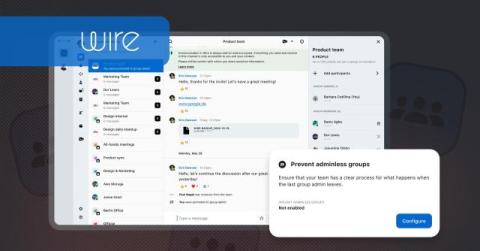
On other platforms, when a group loses its last administrator because someone leaves the company or moves to another team, an authorized operator can step in. The company's IT team or the platform provider's support staff can reassign ownership, update the membership, and restore the group. Wire was designed differently. If a group lost its last administrator, no operator had the access required to repair it. The group became unmanageable.

Identity and Access Management for Secure Collaboration

Most security teams have invested heavily in identity. Single sign-on, multifactor authentication and conditional access now guard the front door of almost every enterprise application. Access decisions keep living after that door closes, in shared folders, partner chats and guest links that nobody remembers to revoke. In our State of Secure Collaboration 2026 survey of 208 CISOs across Germany, France and the UK, 61% said access to shared files stays active longer than intended after a project ends.

Chat Control in 2026: What Happens to Encrypted Messages

Few pieces of EU legislation have been declared dead as often as Chat Control, and few have returned as reliably. In July 2026 a scanning law that more MEPs voted against than for came back into force. On 29 September 2026 negotiators meet again to decide the shape of the permanent regulation. The outcome affects ministries, armed forces, defence suppliers and energy operators, because it determines how much control they keep over who can read their communications.

Wire Apps SDK: Now Available in JavaScript and TypeScript

Wire Apps SDK let developers build automations and integrations that run as full participants inside Wire’s end-to-end encrypted conversations. Until now, that meant building on our Java/Kotlin SDK. Today, we’re extending that same capability to JavaScript and TypeScript, giving teams the freedom to build in the language that fits them best.

WhatsApp in Social Care: The Compliance Risk and What Replaces It

It's a familiar story. A social worker gets a message from a client on a Saturday. A family needs to move a home visit. A colleague forwards a photo of a document that has to be dealt with before Monday. None of it goes through an official system. All of it goes through WhatsApp, because that is where the client already is, and because it works.