

Teams | Collaboration | Customer Service | Project Management

Stakeholder reports: what to include, who needs what, and how to stop reporting into the void

Every stakeholder report I've written that actually changed a decision had one thing in common: it was built for the person reading it, not the person writing it. That sounds obvious, but in practice, most professional services teams default to a single report template and blast it to everyone from the CEO to the client contact. The result? Leadership skims for the one number they care about. Clients get anxious about details that don't concern them.

Agile metrics that actually tell you something useful

Every agile team I've been part of has gone through the same cycle with metrics. Someone proposes tracking velocity. Someone else adds cycle time. A third person builds a dashboard with fifteen charts. Within two months, nobody looks at any of them. The problem is not a lack of data. It's a lack of clarity about what decisions the data should inform.

The 10 client reporting tools that actually save you time

Here's a number that still stops me mid-conversation: 57% of agency professionals spend more time reporting on work than doing the actual work. That's from our Sprint to AI report, and every time I share it, the response is the same slow nod of recognition. I've lived that reality.

What's new in Teamwork.com | June 2026

Just in time for summer, we're rolling out a brand new look and feel—shaped by your feedback—alongside some helpful updates to the way you plan, quote, and manage work. Whether it's building out project plans before staffing is confirmed, locking in exchange rates that match your finance team, or a cleaner Task Details experience on the horizon, this month's releases are all about giving you more control and less noise. Let's dig in!

Marketing agency software: 15 tools your agency actually needs

Most marketing agencies don't have a tool problem. They have a "too many tools" problem. I've seen it over and over across Teamwork.com customers. An agency starts with a project management app, bolts on a time tracker, and adds a separate invoicing tool. Then nobody can tell whether a retainer is profitable until the quarter ends. According to Teamwork.com's Sprint to AI Report, 58% of professional services teams juggle three to five separate tools just to manage their work.

The best marketing project management software to run campaigns without the chaos

I've spent the better part of a decade managing marketing campaigns for agency clients, and here's what I know for sure: the tool you pick to manage that work matters more than most people think. Pick the wrong one and you're duct-taping spreadsheets to Slack threads. Pick the right one and your team actually ships work on time, on budget, and without the 11 p.m. "where's that deliverable?" panic.

14 agile project management tools compared by someone who's used them all

Agile project management tools are software platforms that help teams plan, execute, and deliver work in short iterative cycles. They support sprint planning, Kanban boards, backlog management, and real-time progress tracking, giving teams the flexibility to adapt as priorities shift.

10 project planning software tools I tested for managing client work

I spent the better part of a decade juggling client projects across spreadsheets, email threads, and at least three tools that never talked to each other. One Monday morning I realized I'd burned two hours just pulling together a status update for a single account. That was the moment I knew the tools were the problem, not the process.

The best client management software for delivering profitable client work

I've spent the better part of a decade inside professional services operations. First running delivery at agencies, then joining Teamwork.com to help people learn about the platform I wished I'd had. The pattern I kept hitting was the same: a CRM held the client record, a spreadsheet tracked the budget, and a project tool held the tasks. None of them talked to each other. Every Monday morning started with a frantic reconciliation ritual that ate hours and still left blind spots.

Build vs buy project management software: the true cost for services firms

I get invited to compete against custom builds almost every week now. Not against competitor vendors. Against a team of developers, or increasingly against an AI coding tool and a founder who is good with prompts. It usually starts the same way. A services firm has a workflow that no off-the-shelf product covers perfectly. So they get a quote from a dev shop, or they spin up a build themselves over a weekend.

Task automation strategies that actually reduce your team's busywork

I've spent enough years in client services operations to know what happens when teams skip straight to buying automation tools. They automate the wrong things, or worse, they automate a broken process and just break it faster. This guide covers the strategic approach that actually works: how to audit what needs automating, prioritize the highest-ROI tasks, and build a roadmap that sticks. You'll also see where Teamwork.com fits into the picture.

Automated time tracking: how it works and why your team needs it

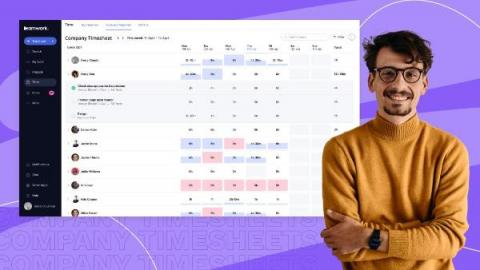
Every professional services team I've been part of has had the same argument at some point: "Why aren't timesheets getting done?" Before I joined Teamwork.com, I spent years managing delivery for agency teams. The answer was always the same. Manual time tracking is painful, so people avoid it. Automated time tracking fixes the root cause by removing the manual work entirely. This guide breaks down how it works, what methods are available, and how to choose an approach that actually sticks with your team.

Resource levelling: what it is, how it works, and when to use it

I spent the best part of a decade in client services, and have seen firsthand how resource planning can make or break your team and projects. If there is one thing I have learned, it is that most project delays do not start with bad estimates or unclear scope. They start with a resource plan that looks fine on paper but falls apart the moment two projects need the same person on the same day.

Benchmarking for projects: how to measure what matters and close the gap

A project that finishes on time isn't automatically a project that performed well. I've seen plenty of "green status" projects that quietly burned through margin, overloaded the team, and left the client underwhelmed. Without a reference point, you can't tell the difference between a genuinely healthy project and one that just crossed the finish line.

The future of agency operations isn't about AI. It's about control.

I spent a day in New York with agency leaders, operators, and industry experts at OPERATE'26, Teamwork.com's inaugural Agency Leaders Summit. The conversations covered scaling, profitability, AI, talent, and leadership. But the strongest takeaway wasn't fear about the future. It was optimism. Here's what the day kept coming back to.

How to handle scope creep before it wrecks your margins

Scope creep doesn't announce itself. It shows up as "a small tweak" here and "one more round of revisions" there. By the time you notice, the project that was supposed to be profitable is bleeding money. I've spent years managing projects inside professional services firms and now at Teamwork.com. The pattern is always the same: small, untracked additions that seem harmless but collectively eat the entire margin.

What c-suite leaders miss when agencies scale

Growth looks exciting from the boardroom. More customers. More revenue. More headcount. More opportunity. But for the people responsible for turning strategy into reality, growth feels very different. It feels like communication breaking down. Managers becoming stretched. Processes that once worked suddenly collapsing under the weight of scale. Customers experiencing the impact before leadership dashboards ever reveal a problem.

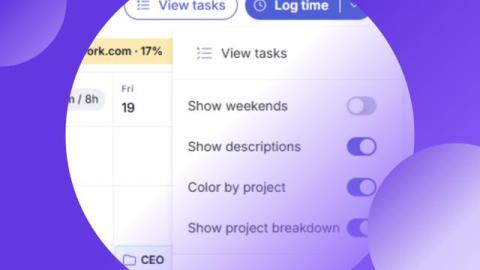
A streamlined Task Details experience, shaped by your feedback

We're always looking for ways to make the work you do in Teamwork.com feel simpler. Over the past year, one theme that has consistently appeared in customer conversations, product research, and your direct feedback? Task Details—one of the most heavily used areas of Teamwork.com—can sometimes feel busy, overwhelming, and maybe even a little cluttered at times.

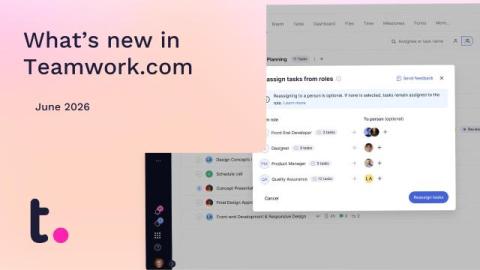
Assign Tasks to Roles: Plan before assignment is finalized

Project planning rarely starts with task assignment locked in. You know the work that needs to happen, but the exact people? That often comes later. Until now, tasks in Teamwork.com required you to assign work to a specific user or team from the start. That created friction during early-stage planning, especially when task assignment decisions were still evolving.

How to forecast delivery capacity from your sales pipeline

The core question every professional services operations leader needs to answer: can your team actually deliver the work that is likely to close? Generating pipeline is only half the challenge. The other half — the one that quietly breaks delivery teams — is knowing whether you have the capacity to absorb that work before contracts are signed and start dates are set.

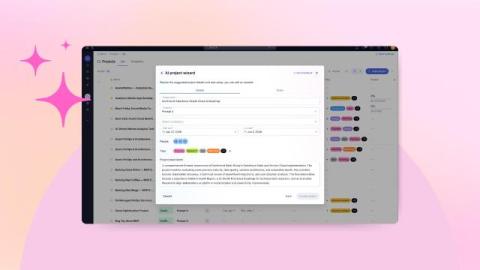
Introducing the new AI Project Wizard: faster, smarter, and built around your feedback

Project setup is one of those tasks that everyone knows is important, but nobody enjoys doing. With the new version of the AI Project Wizard, your team can turn client briefs into full-fledged projects within seconds. Thanks to new improvements based on your feedback (including ready-to-use task lists and better syncing with documents), project planning will feel less like administration and more like acceleration.

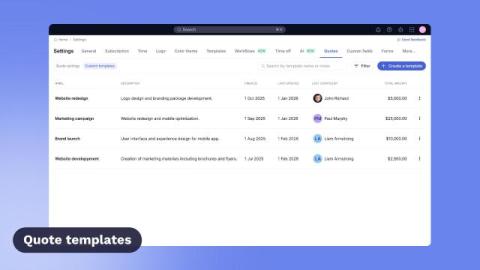
Create Quotes faster and stay in control with these new updates

Creating quotes should help your team move opportunities forward—not slow them down with repetitive setup work, endless searching, or manual intervention. That's why we're introducing three major improvements to Quotes: Together, these updates make it easier to create consistent quotes, find the information you need faster, and tailor Quotes precisely to the way your team, and clients, work.

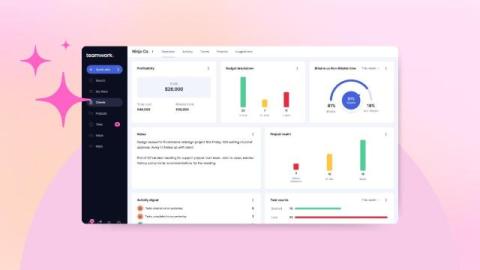
How to track and present project data that drives real decisions

The gap between tracking project data and presenting it well is where most delivery teams lose time, credibility, and control. I've watched operations directors spend hours every week assembling status decks from three different tools, only to field the same questions from leadership that the data should have already answered. This guide covers what to track, when to track it, and how to present project data so it actually reaches the right people in a format they can act on.

How to choose project management software for your business

Before I joined Teamwork.com, I spent years working in agencies where choosing project management software felt like picking a restaurant in a city you've never visited. The menus all look the same. The reviews contradict each other. And by the time you commit, half your team is already hungry enough to eat anywhere.

Maximizing project management software for client services teams

According to Teamwork.com's The Sprint to AI research, 50% of professional services teams say their PM tools fall short on data management and reporting alone. Another 42% cite resource management gaps, and 38% say profitability tracking is missing entirely. Your team probably owns PM software already. The question is whether you're getting your money's worth. For C-suite leaders and business owners at professional services firms, this is not a feature conversation. It's a revenue conversation.

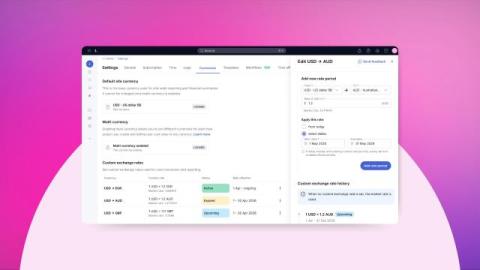
Introducing Custom Exchange Rates for multi-currency projects

When project budgets, invoices, and forecasts all ride on a rate that shifts every single day, your numbers never quite sit still. Custom Exchange Rates lets you set your own exchange values, so project operations stay aligned with your finance team's accounting practices instead of the daily market. Lock rates while still seeing live market rates for reference.

Cost forecasting: what it is, why it matters, and how to do it right

In my years managing client work before joining Teamwork.com, I watched the same pattern repeat across agencies and consultancies. A project gets scoped. A budget gets approved. Then nobody looks at the numbers again until the final invoice lands. By then, the margin is already gone. Cost forecasting is the discipline that breaks that cycle. It gives you a continuously updated view of where your project costs are heading, not where they were last quarter.

Strategic project planning: a delivery director's guide to predictable outcomes

I have watched strategic initiatives collapse not because of bad execution, but because they were never translated into resourced, sequenced project work. In professional services, this gap between leadership's strategic commitments and the delivery team's actual capacity is where predictability dies. The firms that consistently deliver on time and on margin are not working harder. They have a planning system that connects strategic priorities to live capacity data.