
Teams | Collaboration | Customer Service | Project Management

Atlassian Design System: Building the context engine for the AI era

Maria Christley is the Head of Design for the Atlassian Design System, leading over 35 designers globally across Design Language, Accessibility, Systems Architecture, and AI. She is a 2025 Women Leading Tech finalist and has spoken at Figma Config and UX Australia. Rachel Radford is a Design Manager on the Atlassian Design System team, where she leads designers working on the systems, components, and practices that power Atlassian’s products at scale.
Human + AI collaboration at scale: Highlights from the Team '26 founder keynote

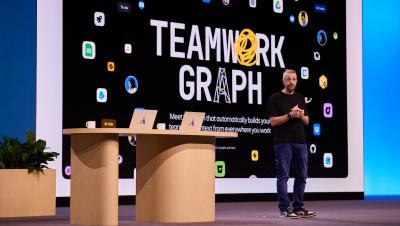
As organizations work to bring humans, agents, and automation together, teamwork is getting even more complex. If your AI strategy feels like a collection of one-off experiments layered onto disconnected tools and siloed knowledge, join Atlassian leaders to see how Teamwork Collection brings together Jira, Confluence, Loom, and Rovo into a connected foundation for human-AI collaboration at scale. Key takeaways: Watch the full Founder Keynote here.

Is AI flattening your team's creativity? Here's how to tell.

Think about your to-do list for a given work week. From responding to a colleague’s quick message to building a team strategy, how do you prioritize how much time and energy to allocate to each task? Behavioral science tells us most of us don’t optimize; we satisfice — we find the first “good enough” option, and we move on. The term, a mash‑up of “satisfy” and “suffice,” was coined by Herbert A.

Introducing Cursor in Jira

Starting today, Jira teams can assign work directly to Cursor, where a cloud agent will pick it up and begin working. You can steer agents directly from Jira, your IDE, or Cursor on the web. When Cursor needs input or is ready for review, it will notify you in Jira. When it opens a pull request, it will be automatically linked back to Jira.

The AI efficiency paradox: What to do when AI boosts productivity but not results

There’s a paradox happening with AI: Usage and productivity are up, but bottom-line results aren’t always as obvious. It’s a familiar pattern you might be seeing in your organization: Leadership invests in AI, and employees say they’re getting more done: more code, more campaigns, more analysis.

Highlights: Founder keynote: Human-AI collaboration at scale | Team '26 | Atlassian

"It’s time to reimagine teamwork for the AI era. Join Atlassian leaders to hear how human-AI teams collaborating in one system of work will propel your entire organization forward. About Atlassian: Behind every great human achievement, there is a team. From medicine and space travel to disaster response and pizza deliveries, we help teams all over the planet advance humanity through the power of software. Our mission is to help unleash the potential of every team.

Inside Reddit's IT playbook: Building for scale and AI-readiness

The learnings are based on our recent webinar, “Inside Reddit’s IT playbook for AI and scale”. Check out this session and other conversations with customers on-demand. When Reddit grew from fewer than 400 people before 2020 to roughly 4,000 globally distributed employees today, it wasn’t just their headcount that changed. The mandate for IT changed with it.

3 ways AI alert grouping is transforming on-call engineering at Atlassian

At Atlassian, on-call engineers live at the intersection of urgency and uncertainty. Floods of noisy alerts sap focus, energy, and productivity — especially when responders must decide what matters, what can wait, and what’s just noise. A single underlying issue can trigger dozens of near‑identical alerts in hours.

How customers are using Confluence Agents to turn knowledge into action

Since we first launched custom agents in May of 2024, we’ve seen teams use Rovo to build agents in Confluence that help them accomplish everything from turning customer feedback into PRDs to maintaining consistency across large sets of data and processes. And agents are getting even more popular, with over 5M invocations of agents every month. They take the foundation of knowledge that lives in Confluence, and act on it, saving customers over 200K hours in February alone.

Highlights: Where does your chain break? Strategy that lives in boardrooms and PowerPoints

Stop losing millions to disconnected work. Learn how to build a unified system of work using the Atlassian stack to align engineering execution with executive strategy. When engineering teams lack a unified system, they often chase the wrong priorities or duplicate efforts, leading to execution drift and lower morale. In this session, Natalia Baryshnikova (Atlassian) and Vince Butera (Anaplan) share how to move beyond a collection of tools to create a single, connected platform using Jira, Jira Align, Compass, Confluence, and Rovo.

Highlights: Where does your chain break? Strategy that lives in boardrooms and PowerPoints

"Stop losing millions to disconnected work. Learn how to build a unified system of work using the Atlassian stack to align engineering execution with executive strategy. When engineering teams lack a unified system, they often chase the wrong priorities or duplicate efforts, leading to execution drift and lower morale. In this session, Natalia Baryshnikova (Atlassian) and Vince Butera (Anaplan) share how to move beyond a collection of tools to create a single, connected platform using Jira, Jira Align, Compass, Confluence, and Rovo.

Rovo makes AI-native teamwork real for the enterprise

Teams of all stripes have run billions of cross‑functional, multi‑tool workflows on Atlassian. After decades spent helping them plan, build, ship, and do, those same workflows are now lighting up with millions of agentic automations, up 7x in the last six months alone. All signals point to the rise of the AI‑native organization, where humans operate at critical junctures, deciding what matters and why, and agents do more of the execution.

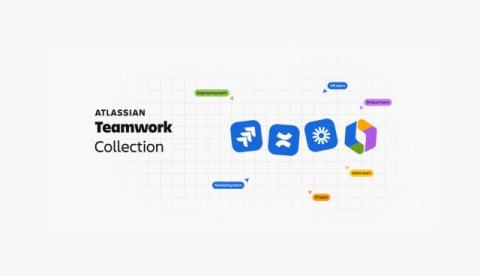
Built for the Next Era of Teamwork: What's New in Teamwork Collection

We’ve all been there – toggling between six tabs, copying content from one tool into another, and wondering if anyone actually read the brief. The promise of AI was supposed to fix this. Instead, most teams got a chatbot bolted onto the side of their screen. We think AI should work the way a great teammate does: show up where the work happens, understand what’s going on, and actually move things forward. Not from a separate window. Not after a five-paragraph prompt.

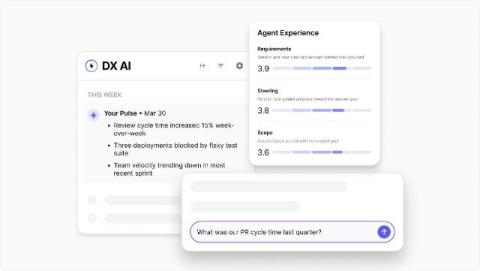
Building for AInative engineering: What's new in DX

AI is changing how engineering teams work faster than most organizations can adapt. Coding assistants are now part of the daily workflow, agents are starting to own tasks end-to-end, and the way we deliver software is being redefined in real time. With that shift, engineering leaders are facing a new set of questions. Are these tools actually improving outcomes? Where are they falling short? Which teams are seeing value, and which aren’t?

Atlassian Teamwork Graph: The context engine behind your AI-everywhere

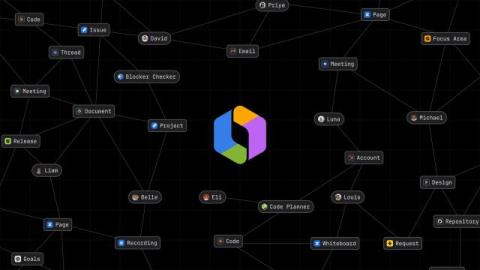
AI agents are only as good as what they know. Right now, most don’t know enough. Not because the AI is broken, but because the data is. Information is scattered across tools, siloed by department, stripped of the human context that makes it useful. Agents guess. They hallucinate. Teams splinter around different versions of the truth. Context isn’t a file or a ticket. It’s the space in between: why a decision was made, who owns it now, what broke last time.

The bottleneck keeps shifting: What AI is changing about how we build

Over the past few decades in the technology industry, some of the biggest constraints to building products have been about having enough engineers, time, or compute. For the first time, that era is ending. Tech teams are experiencing a revolution unlike anything they’ve seen before. The barriers to entry for building have all but disappeared. The constraint no longer comes from producing enough output, but from deciding what to build, and the restraint required to build something good.